Report & document automation
Turn manual reporting into automated, reviewed reports.
For advisory, valuation, and professional-services firms: one pipeline turns your in-house knowledge, your connected systems, and a defined report scope into branded, human-reviewed reports — delivered. Start with one reporting workflow and a rough value estimate.
Your knowledge in · Human-reviewed · Delivered under your brand
Report · Deck · Video
Illustrative proof of concept on public data — not a certified valuation, nor financial or investment advice. Estimates are point-in-time, based on public data available as at the generation date.

Who you'll talk to
Tao Ling
Founder, Xcelerent · Sydney, Australia
Microsoft-certified data engineer · MarkLogic Certified Administrator & Developer
- 30 minutes
- No charge
- No pitch deck
Reporting is where most teams start. The same governed pipeline also covers knowledge management, document generation, and data workflows across your stack — see all services.
How the pipeline works#
Knowledge, data, drafting, branding, review, and delivery run as one governed pipeline — not a chain of separate tools you stitch together.
Your policies, precedents, and know-how — governed and current.
The source systems your data already lives in.
Exactly what this report must cover — agreed up front.
Sources and scope assembled into a first full draft.
Your templates, tone, and format applied automatically.
A person proofreads and approves before it ships.
A branded, reviewed report — ready to send.
Every stage names a result, not the engine behind it — and nothing ships without a person’s sign-off.
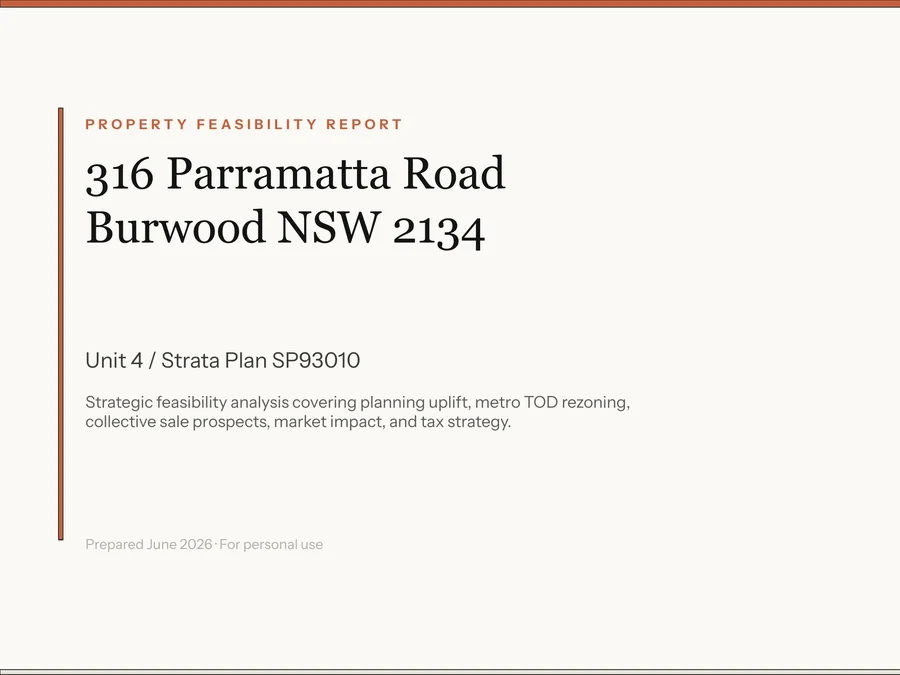
June 2026 build — proof of concept. This exact pipeline ran end to end on a single public property listing — draft generated, corporate branding applied, human-reviewed — with public listing data standing in for your connected-systems input. The result: a complete draft analysis and a branded explainer in both English and Chinese. The same pipeline produces your financial, compliance, or operations reports. See the finished outputs →
Start with the value check#
Most first workflows are one of these: monthly report packs, document packet assembly, quote and approval preparation, compliance review queues, document checks and data extraction, or a governed assistant over your own material. Estimate one below — the result suggests whether to pause, diagnose, map value, or pilot, and you book only if it fits. What to automate first explains how to choose the workflow.
Quick Value Check
Estimate one workflow before you book.
Rough estimates are fine. This tool runs in your browser and does not send, store, or submit the entries anywhere.
Indicative Result
Recommended next step
Assumes a good data baseline and a moderate workflow. Open “Refine the estimate” above to change them.
Book the free 30-minute discovery call when you're ready. If the workflow looks promising, I may ask for the fuller assessment before or just after booking.
Book a free discovery callPackages#
A$3k-A$6kAI Quick Diagnostic
Best fit: ~A$30k-A$75k/year of value at stake
Check whether a smaller or uncertain opportunity is worth pursuing.
- Light workflow review
- Rough value estimate
- Fit/no-fit recommendation
- Typically 2-3 weeks, about 3-4 hours of your team's time in total
A$7.5k-A$18kAI Value Finder
Best fit: ~A$75k-A$150k/year+ of value at stake
Find the safest, highest-value AI opportunity before committing to a build.
- Workflow value map
- Risk and feasibility review
- Roadmap and prototype sketch
- Typically 3-5 weeks, about 2 hours a week from one person
A$25k-A$75kAgentic Value Pilot
Best fit: ~A$150k-A$450k/year+ of value at stake
Prove one AI workflow creates measurable value with real users and human approval points.
- One working pilot — typically 4-8 weeks
- Baseline and before/after measurement
- About 2-4 hours a week from one person who knows the workflow
- Staged fees: stop at any stage and keep what is built
- 30 days of support after build delivery
A$8k-A$30k/monthManaged AI Value Partner
Best fit: ~A$1m-A$2m/year+ of value at stake
Monitor, improve, and govern your AI workflows over time.
- A$30k-A$120k setup
- Retainer, billed monthly
- Optional capped value share with sunset
Prices are in Australian dollars and exclude GST unless stated otherwise.
Optional success fees or value-share terms apply only where value can be verified: they require verified baseline data, an agreed data source, one primary success metric, attribution rules, exclusions, a written value measurement schedule, caps, review periods, a dispute-handling process, and professional legal/commercial review. They are not calculated from website inputs.
From your knowledge to a finished report#
Your reports are only as trustworthy as the knowledge behind them. I build you a governed knowledge layer that answers from your own material — every answer traces back to a real source, and your confidential information stays under your control. Report automation fuses that layer with external public research, and DocMark renders the branded, human-reviewed result.
Branded output, automatically — powered by DocMark
DocMark turns the structured result into branded, formatted, verified deliverables — reports, decks, spreadsheets, and documents — so the last mile of formatting and brand compliance is automated too. DocMark is a subscription product, billed through your engagement.
See Enterprise Document GenerationCommon questions#
You’re a solo practice — what happens to the systems you build for us?
You own what I build. Transfer, not lock-in: documentation and handover are part of the scope, not an extra invoice. I build with tools your team can already support — Microsoft 365, Python, APIs, KNIME, MarkLogic, or your existing systems — so the system stays yours to run. A running cost to know about: DocMark, where your pipeline renders branded documents, is a subscription billed through your engagement. Producing new documents needs it. Governance, documentation, and handover matter as much as the automation itself.
How do you keep our confidential data safe?
Your confidential information stays under your control. The knowledge layer is deployable in your own environment or a private, isolated instance, with local inference when the data cannot leave the building, and your documents are never used to train third-party models. Assistants run read-only by default, scoped to each person’s permissions, with every query logged. I never vacuum up inboxes or chat history — any communications source is included only with your explicit authority, scoped access, and human-reviewed governance. While we work together, the documents you share stay in your own environment by default — see the security and data handling page.
How is pricing structured — is it a day rate?
No. Agentic AI engineering is priced around the value case, delivery risk, and scoped outcome — I don’t sell the work as developer hours. A light diagnostic and a workflow value map can come first, so you see the value case before committing to a build. Fees are staged: observe and design are paid as each finishes, build on delivery, and you can stop at the end of any stage.
What if AI turns out to be the wrong tool for our workflow?
I’ll say so. The right answer may be no fit, a smaller diagnostic, deterministic automation, data cleanup first, or revisiting the workflow later. The value check is built so you book only if it fits — and if there’s no sensible first slice of work, I’ll tell you. A paid pilot works the same way: if it misses the measure we agreed, you keep what was built, pay only for the stages already delivered, and I’ll say why.
How do we get started, and what happens on the first call?
Start with the value check above, then book a free 30-minute discovery call if the opportunity looks real. The first call is no charge and no pitch deck: it starts with your workflow and value assumptions, not generic AI theatre. We work out whether there’s a useful workflow to build and what “observe first” would look like — an observe → design → build → transfer engagement for your context.
Start with one workflow.
Use the value check above, then book a free 30-minute discovery call if the opportunity looks real.
Book a free discovery callOr send a message · email lingtao@xcelerent.com · Sydney, Australia
Product names are referenced for compatibility and description only, and do not imply partnership, endorsement, or certification by any third party.